Commercial Waste Removal in Lewisham
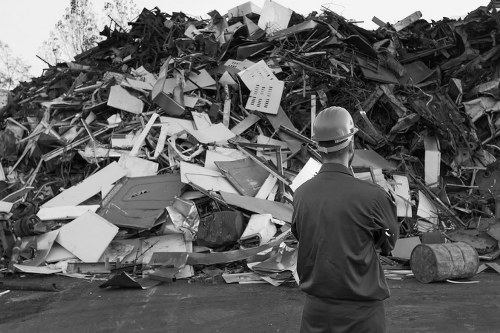
Commercial waste removal in Lewisham needs to be practical, consistent and suitable for the way local businesses work. We collect and remove waste streams from offices, shops, hospitality sites, managed premises and other commercial settings, helping customers keep spaces clear without turning disposal into a disruption. The emphasis is on sensible handling, clear communication and a service that supports day-to-day operations rather than interrupting them.
Our commercial waste removal service covers the collection of general business waste, recyclable materials and mixed non-hazardous items that have built up through trading, refits or routine housekeeping. We can support one-off clearances as well as recurring needs, depending on what the site generates. If you are planning a clearance or want to compare options, you can request a quotation once you know the likely volume and type of waste involved.
Business waste collections for working premises
Commercial waste is rarely uniform, so the collection plan has to reflect the site rather than force the site to fit the collection. Offices may need old desks, packaging and filing material removed; retail units often produce display waste, cardboard and broken fittings; food and drink premises can have bulky container waste, shelving or equipment to clear. We handle these everyday jobs with a straightforward process that keeps the focus on safe loading and appropriate disposal.
For many customers, the main benefit is being able to clear accumulated items without overcomplicating the job. Sorting what can go, what should stay and what needs special handling is easier when the service is set out clearly from the start. If you already know the broad category of waste, that helps shape the quote, but a detailed inventory is not always necessary for smaller commercial collections. Let us know what you need removed and we can advise on the most suitable approach.
Common kinds of commercial items we remove
- office furniture and fit-out waste
- shop shelving, display units and packaging
- bagged general waste and mixed non-hazardous rubbish
- cardboard, pallets and other recyclable business materials
- bulky items from storage rooms, stock areas and back-of-house spaces
Office clearances and workplace decluttering
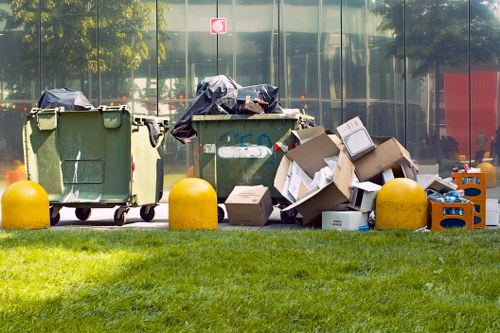
Office clearances often involve a mixture of furniture, old paperwork containers, broken storage and items left behind after staffing changes or layout changes. We remove desks, chairs, cabinets, shelving and other workplace fixtures that are no longer required, with an approach that keeps the practical side of the job at the forefront. Where a workspace needs to remain partly operational, it helps to break the job into manageable sections rather than treating it as one large interruption.
One useful part of commercial waste removal is that it can support both small-scale decluttering and larger office moves. That might mean clearing a single room, removing redundant furniture after refurbishment, or dealing with several categories of waste at once. If you have access considerations, loading restrictions or particular items that need separating from the rest, mention those when you enquire so the collection can be planned sensibly. Clear information upfront often makes the job easier to quote and carry out.
Furniture disposal and bulky item removal
Commercial premises regularly end up with bulky furniture that is awkward to move and unsuitable to leave stacked in corridors or storage rooms. We remove tables, seating, cabinets, reception furniture and other large items that have reached the end of their useful life. Furniture disposal needs careful handling because it often combines weight, size and awkward edges, so a methodical approach matters as much as the final removal itself.
Some items are straightforward once they are detached or made accessible, while others need to be moved from upper floors, narrow passages or back rooms. That affects labour and loading time, which is why prices usually depend on the type of item, access and the amount of waste involved. If you are comparing options, use the item list to decide what needs to leave together and what can remain. For planning purposes, a short note on the item mix is often enough to begin.
When furniture disposal is the right choice
It suits office refurbishments, unit handovers, replaced fixtures and routine business clear-outs where storage space is limited. It is also useful when a premises has accumulated mismatched furniture that no longer serves a purpose but still takes up valuable room. In those cases, removal is less about creating a dramatic change and more about restoring usable floor area, circulation and storage discipline.
Shop, storage and back-of-house clearance

Retail and storage spaces often build up their own kind of waste: damaged displays, redundant stock containers, packaging materials, broken fixtures and items that have been kept “just in case†for too long. We provide commercial waste removal for those back-of-house areas where clutter can spread quickly if it is not dealt with. The aim is to remove what is no longer useful while keeping the remaining stock or equipment undisturbed.
Clearance work in these settings often benefits from a careful sequence. Heavier items can be removed first, packaging and loose waste can be consolidated, and the remaining area can then be assessed for anything overlooked. If there are goods that need to stay separate from waste, make that clear before collection. A business can save time by grouping items in advance, but it is not essential to have everything perfectly arranged before asking for a quote.
What affects the cost of a commercial clearance
Commercial waste pricing is usually shaped by a combination of quantity, access and waste type. A few bagged items from a ground-floor office may be simpler than a large load of bulky fittings from an upper-floor premises. Likewise, waste that requires sorting or careful handling can affect the time needed on site. Access, parking, loading distance and item weight are all practical details that matter because they influence the work involved, not just the size of the pile.
For that reason, the clearest way to request a quotation is to describe the location, the approximate volume and the main kinds of items. Photos can help where the waste is mixed or where the layout is tight, but written detail is useful too. If you are unsure whether something belongs with the rest of the load, mention it before the collection rather than after. That keeps the quote realistic and avoids unnecessary back-and-forth.
Useful details to include when asking for a quote
- the type of premises and the room or area involved
- the main waste categories, such as furniture, cardboard or mixed rubbish
- how easy it is to reach the items
- whether lifting, dismantling or separating is likely to be needed
- any timing or access limits that affect collection
About Lewisham
Lewisham is a district in south-east London with a long history shaped by transport, trade and suburban growth. It sits at an important point in the wider borough, with the River Ravensbourne and the Waterlink Way forming part of its physical character, while the centre is marked by a busy townscape that has changed considerably since the nineteenth century. The area developed as a market town and later expanded through railway connections, which helped turn it into a significant urban centre for homes, shopping and local administration. Today, Lewisham includes a mix of high streets, residential streets and civic buildings rather than a single uniform centre, and that variety is visible in the changing scale of streets and development around the district.
Waste handling with recycling in mind
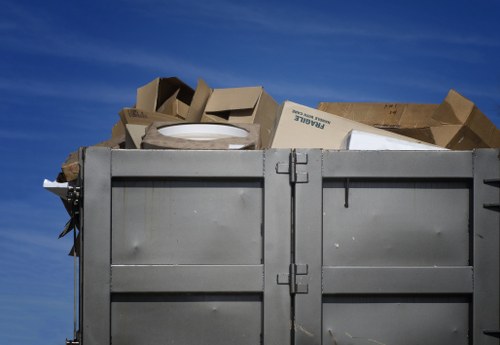
Commercial waste removal is not just about taking items away; it also involves deciding what can reasonably be separated for recycling or further processing. Cardboard, some metals, certain plastics and other recoverable materials may be dealt with differently from mixed general waste. Our approach is practical rather than decorative: we aim to make sure recyclable material is not mixed unnecessarily with waste that is harder to separate later. This matters both for the efficiency of the job and for the way a business manages its own clear-out.
Recycling decisions are easiest when the load is divided into simple categories before collection, but you do not need a full sorting operation to begin. Even a basic distinction between reusable items, recyclable materials and general rubbish can make planning easier. Where items are unsuitable for standard commercial waste routes, they should be identified in advance so they can be treated appropriately. That keeps the service suitable for ordinary business clearances without promising anything beyond what the load itself allows.
Hazardous and specialist items
Some business waste cannot be managed in the same way as ordinary office or shop rubbish. Items such as chemicals, contaminated materials and other hazardous waste require more careful consideration because the disposal route depends on what the item is and how it has been used. Where a load includes anything unusual, it is better to separate it from standard commercial waste at the earliest stage and ask for guidance before the collection is confirmed.
We can discuss the difference between non-hazardous items that are suitable for routine removal and materials that may need specialist treatment. That conversation is important because it avoids misunderstanding and helps keep the quotation accurate. If a site contains mixed waste, the safest approach is to identify the questionable items rather than assuming they can travel with the rest. Accuracy matters more than speed when the waste category is not straightforward.
Preparing a commercial collection

A good collection starts with a sensible overview of what needs to go. If the waste is spread across several rooms, it helps to keep similar items together where possible and to identify anything fragile, heavy or awkward before the team arrives. You do not need to turn the premises into a warehouse of labelled piles, but a little organisation makes loading smoother. A clear route to the items and simple access arrangements usually matter more than anything elaborate.
If your premises has staff on site, it can also help to decide who will point out what needs removing and who will confirm the final load. That reduces confusion and keeps the collection moving. Then, once you have the basics, you can request a quotation and compare it against the work required. For a straightforward enquiry, you can also use our pricing and quotes page to take the next step.